Inclusion Europe met with European Commissioner Glenn Micallef on 13 March 2026 to talk about inclusion of people with intellectual disabilities and their families.
We talked especially about the role of culture and sports in creating opportunities for inclusion, and about young people (both people with intellectual disabilities and their siblings).
Commissioner Glenn Micallef
Glenn Micallef is the European Commissioner for Intergenerational Fairness, Youth, Culture and Sport.
“His task is to give young people more freedom, say and responsibility within our societies, building on what brings us together in diversity, from our cultural heritage to sport at all levels.”
This includes coordinating the Youth Policy Dialogues, which are meetings each European Commissioner will organise every year.
For example this week, Commissioner for Equality Hadja Lahbib organises the Youth Dialogue meeting with young people with disabilities. Tamara Byrne will represent Inclusion Europe at this meeting. Tamara is a self-advocate from Ireland.
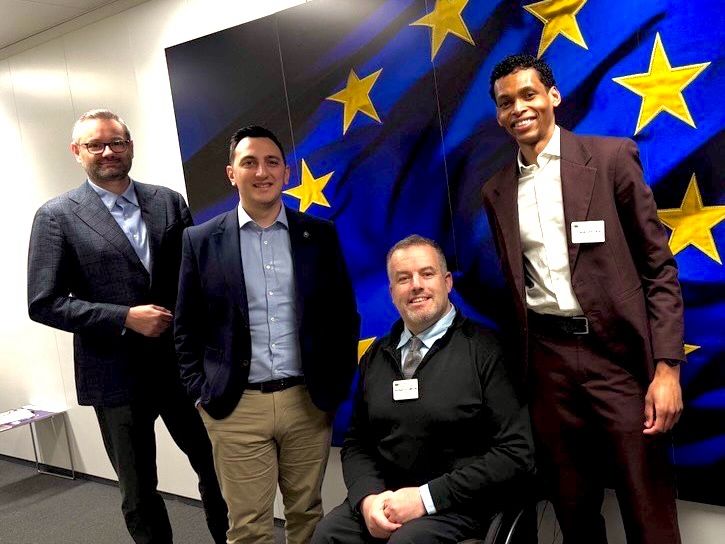
Lack of opportunities
Inclusion Europe talked about the importance of opportunities for young people with intellectual disabilities – and the ways they are being denied good opportunities in education or employment.
Soufiane El Amrani talked about how having getting a job helped him to develop new skills and experiences, that he now applies in his changing roles and responsibilities. He also said having a job is important to being able to live independently and being included.
Freddy Jussien presented some key findings from Inclusion Indicators:
- At least 660,000 children with intellectual disabilities are in special schools in Europe.
- Very few people with intellectual disabilities are employed on the open labour market.
Siblings and young carers
Inclusion Europe also talked about siblings of people with intellectual disabilities – young people very much overlooked in policy debates (alongside other young carers).
They often cannot be “just” a sister or brother. They need to compansate for lack of support services by taking on care responsibilities. They also need to navigate complex situations, with significant emotional and psychologial impact – while not being recognised and supported themselves.
Commissioner Micallef welcomed these topics and suggestions as important for upcoming EU initiatives targetted at young people.
Culture
Milan Šveřepa talked about the European Capital of Culture programme, which highlights the richness and diversity of cultures in Europe.
Culture plays a big role in inclusion of people with intellectul disabilities. (So does sport, another of the Commissioner’s responsibilities).