Milan Šveřepa writes about a recent visit to Romania and all the things we learned there.
Earlier this month, Helena Lambsdorff and I visited Timișoara, Romania, to meet with many people working to end segregation of people with intellectual disabilities — self-advocates, families, professionals, and local authorities.
Where should EU money go? “Here!”
At Fundatia Pentru Voi, we saw examples of support for people to live included in the community. We also learned about the challenges they face:
- lack of funding for community-based support;
- complicated and ever-changing regulations;
- lack of progress on deinstitutionalisation.
16,000 people in Romania are segregated in institutions, and many more live without proper support or income.
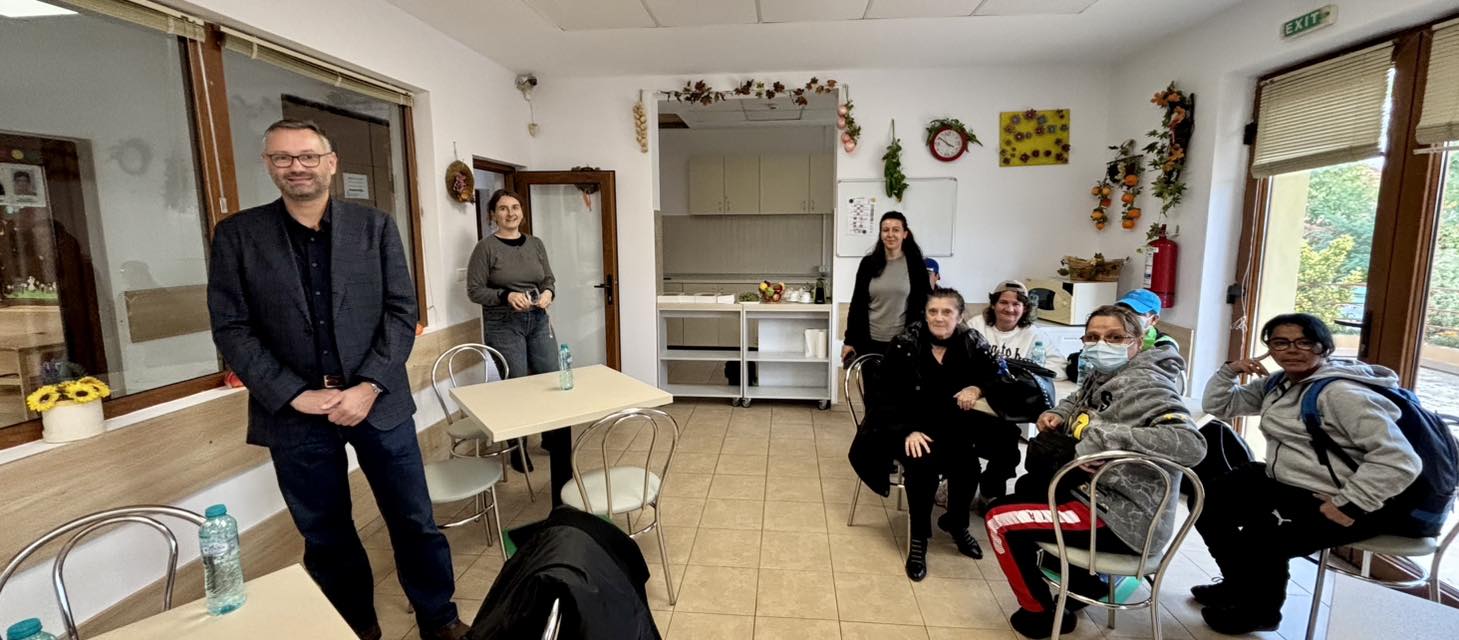
During our discussion with self-advocates and staff, one moment stood out: When we talked about how EU money should be used, one self-advocate hit the table and said:
- “Here! The money should go here!” — meaning to the people, the support they need, and the life they want in the community.
Pentru voi is a member of Inclusion Europe. They provide services such as day centers or sheltered housing for people with intellectual disabilities. They also support people to have work.
We visited just two weeks before Pentru voi celebrate their 30th anniversary. Congratulations and well done on all your work!
How to build inclusion?
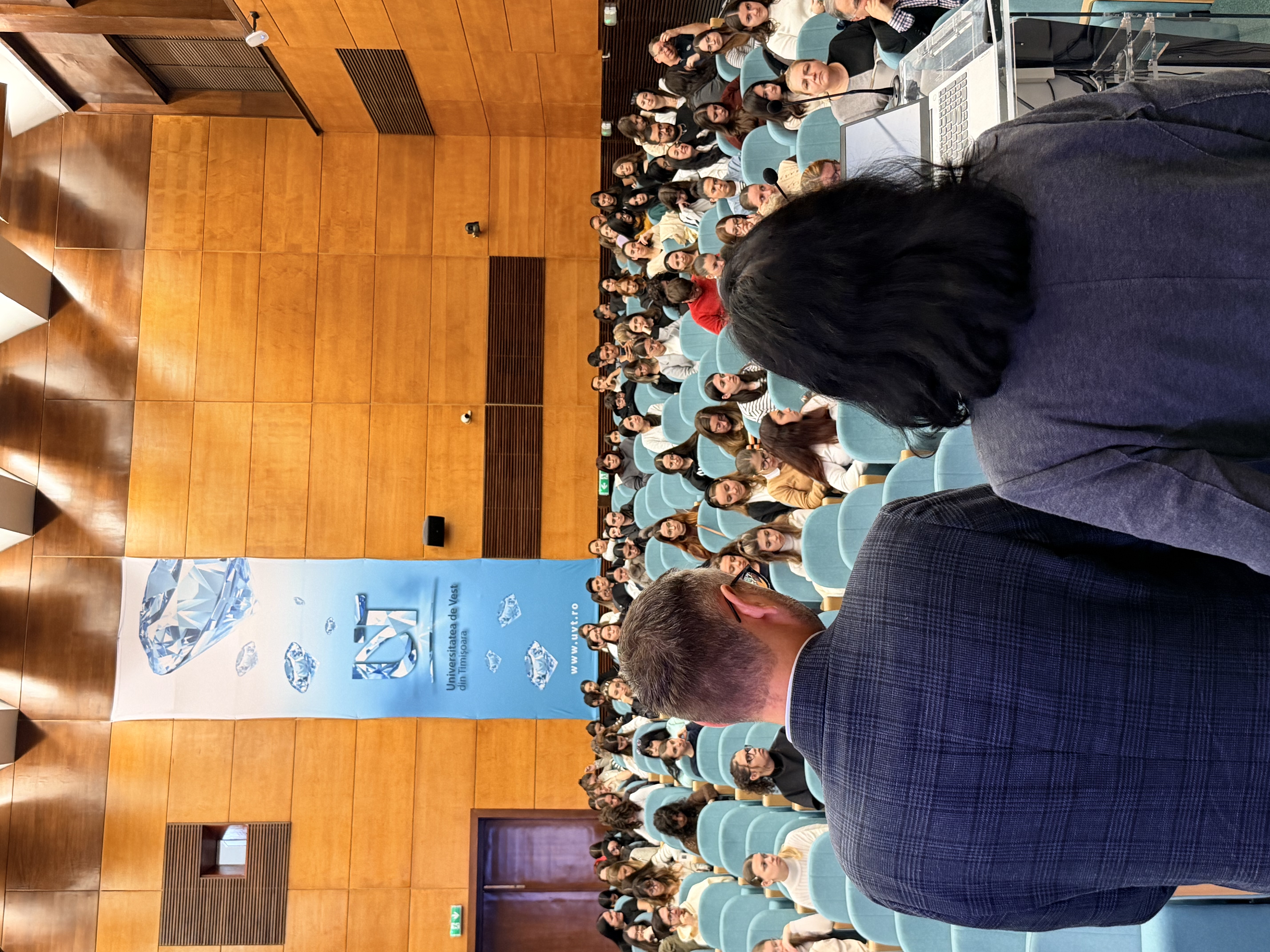
The next morning, I gave a speech for about 100 social work and psychology students at the West University of Timișoara.
I talked about what inclusion means: Having a place to live, things to do, and people to see — to have social roles and relationships.
I also spoke about the important role the students will have in their future jobs, supporting people to live independently and included in the community.
Helena spoke about gender equality for women with intellectual disabilities.
Hear Our Voices!
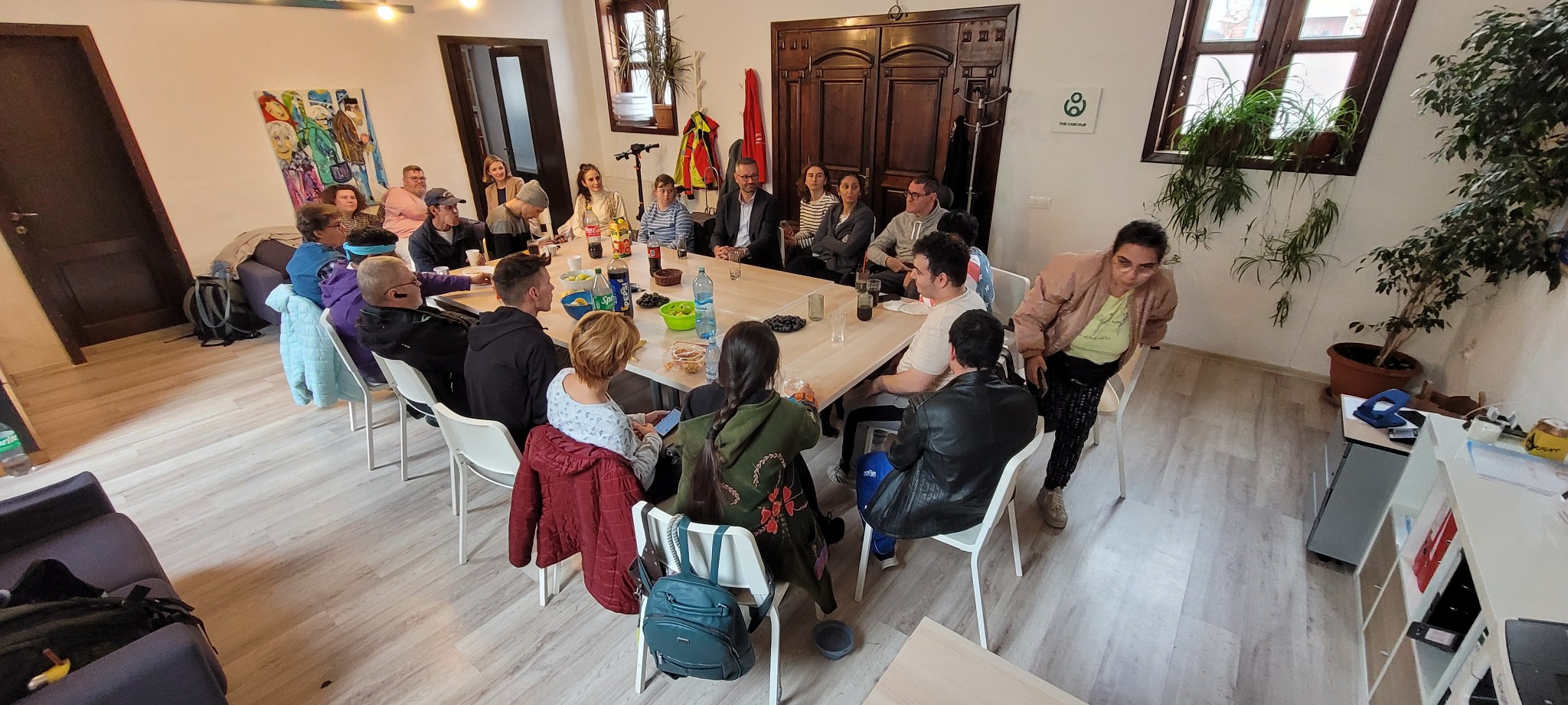
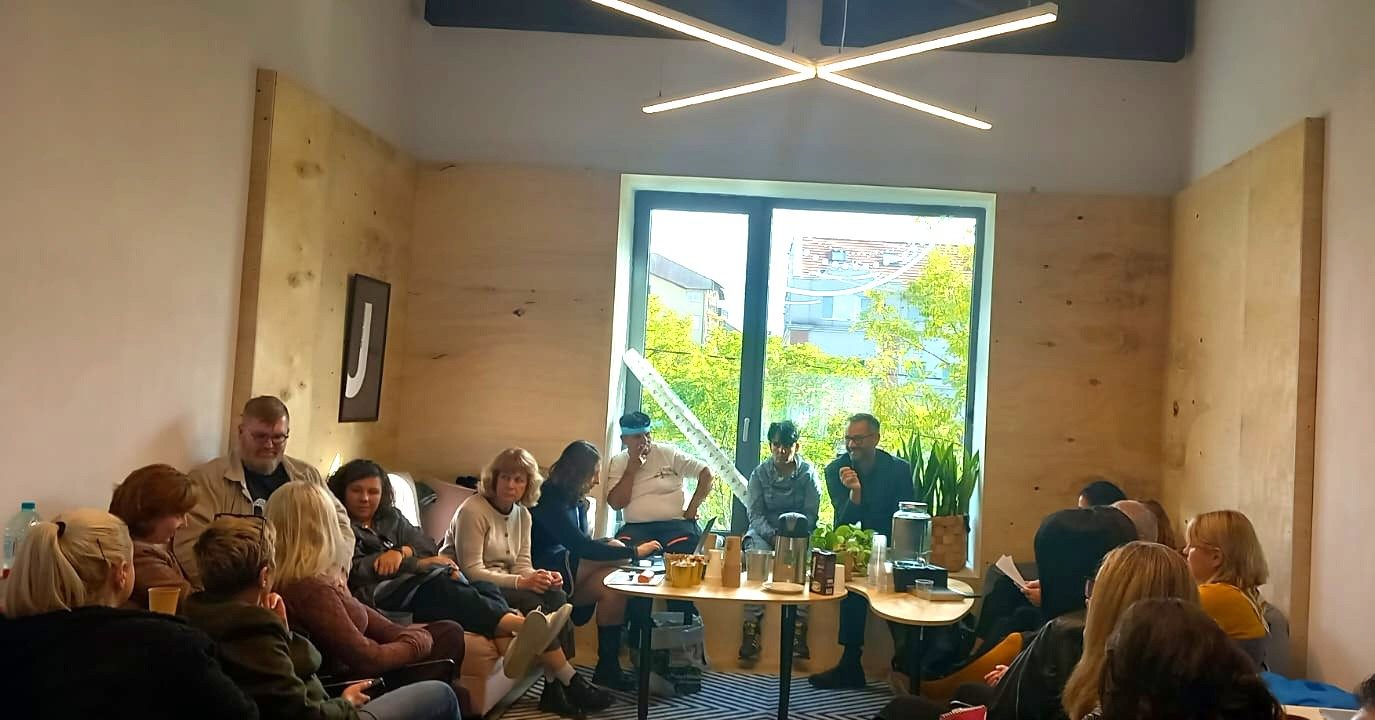
In the afternoon, we met with self-advocates at Ceva de spus (also a member of Inclusion Europe).
We talked with many people, learning about their lives and experiences and work. We recorded interviews and stories that we’ll share in the near future.
Most importantly, Ceva de spus organised a debate about how to improve inclusion. Self-advocates had many questions for me about how different things work in other countries in Europe.
This event was one of the many Hear Our Voices! events organised all around Europe.
How to progress with deinstitutionalisation
On the last day, we talked a lot about how to promote deinstitutionalisation.
First, there was a meeting of organisations from Romania, Czechia, Lithuania, and Slovakia which organised trainings to promote deinstitutionalisation in their countries.
The project is coming to an end, so it was time to discuss what we all learned Together+, and what the next steps could be.
As part of the project, we worked on a guide for deinstitutionalisation, training, and sharing and promoting different examples of how countries work to close institutions.
Debate with regional authorities
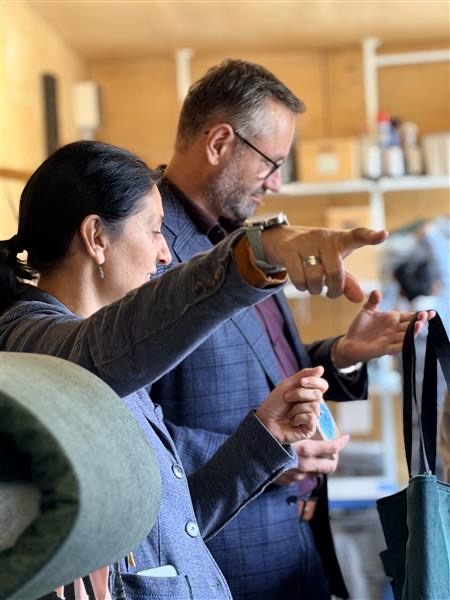
Before the next meeting, we got a tour of OilRight, social business that gives jobs to people with intellectual disabilities and also benefits the environment by re-using cooking oil.
And after, we met with public authorities and service providers from the region. They are working to implement Romania’s deinstitutionalisation strategy, and they had many questions:
- Where to find housing?
- How to build community services?
- How to make it all work with the complicated and limited laws, low benefits, lack of jobs…?
Together with colleagues from Slovakia, Czechia, and Lithuania we tried our best to provide some answers and examples.
But the truth is – Most answers come from doing. As you get on with the changes, challanges and solutions with emerge.
Good work for good lives
After the oficial program finished, we were invited to visit the homes where some of the self-advocates live after leaving institutions. They are very happy to have their own place, and the support and things to do.
I left Timisoara having learned many things. The biggest one: Where there’s a will, there’s a way. Good energy focused on the right things goes a long way.
I want to thank everyone who hosted, debated, asked questions. Especially Roxana Damaschin-Țecu for arranging (and interpreting) most of the program.
Final thoughts?
As we were leaving Timisoara, the Council of the European Union published a document on independent living.
I was approached by a journalist to provide a reaction. This is how I closed my reply:
We just spent 3 days together with people who lived in institutions and those supporting them to have a good life included in the community.
They speak of their experiences of abuse and violence. They talk about their friends that are still in those institutions, among the 16,000 people in Romania.
They also talk about their doubts that the governments and services actually want to make these changes, to implement the kind of policies described in the Council conclusions.
They see the very slow tempo of the changes, they know the people whose lives are being wasted away by segregation and institutionalisation while governments and service providers keep debating “barriers to deinstitutionalisation.”
It is frustrating, to say the least, to hear their stories and to see their skepticism about these kind of policy proclamations.
But being with them also means seeing them just enjoy their life, going about their jobs, seeing friends, being proud of their new homes.
It takes time and effort to get there. But it can be done. I just hope the good words in the Council document don’t stay just that – words.
They must become real work, so that all the other people can have a good life included in the community too.